
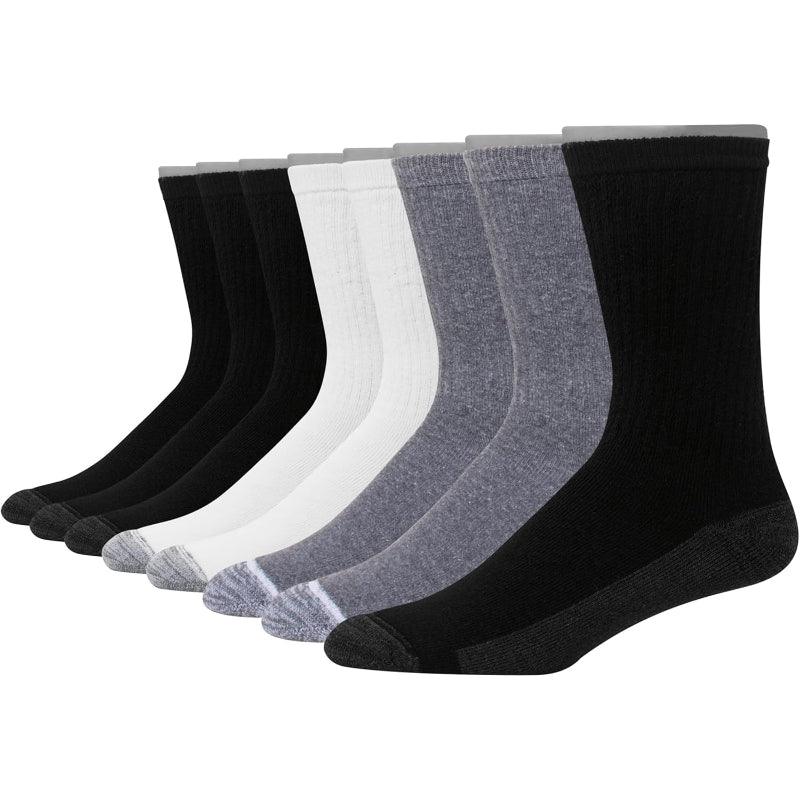
Five-toe socks have separate compartments for individual toes. A reinforced-toe sock has extra construction at the toe area; that description does not mean each toe has its own compartment. Toe cushioning is another feature again. These terms answer different questions, even when they appear together in a product name.
The distinction matters when shopping online because “toe” can appear in a description of an ordinary sock's front section. Start with the physical construction you want, then check the selected product's images and details before considering pack size or color.
Separate shape from construction details
A five-toe design describes the sock's shape at the front. Injinji's manufacturer information, for example, explicitly identifies its five-toe design. That is a clear construction statement; it is not evidence that another product with “toe” in its name uses the same design.
Reinforcement describes a feature of a particular area. Darn Tough's sock anatomy guide identifies the toe as the front pocket of a sock and describes its reinforcement. The sock still needs to be examined for its actual shape.
Cushioning describes padding or knit structure in a stated location. It does not, by itself, establish either separate toe compartments or a reinforced toe. Avoid turning one feature into a claim about another.
Read the description beyond the name
Sockz's 12 Pack Cushioned Crew Toe Socks listing describes reinforced heel-toe construction and cushioning. Those descriptions tell you what the listing says about those areas. They do not establish that the product is a five-toe design.
Similarly, the 14 Pack Moisture Wicking Toe Socks listing describes crew socks and reinforced heel and toe areas. If separate toe compartments are essential to you, resolve that specific point before ordering rather than relying on the word “toe.”
These are distinctions between product terms, not a ranking of one construction as universally better. Choose around the design you prefer and the footwear in which you intend to use it.
Check the front view of the selected item
Look for a clear image of the actual variant's toe area. A photograph inside a shoe may hide the detail you need. A flat-lay or close-up can help show whether there is one shared front pocket or separate compartments.
If the description and photographs leave the construction uncertain, ask a narrow question: “Does this selected item have five individual toe compartments?” That is more useful than asking whether it is a “toe sock,” since the original wording may be the source of confusion.
Keep the answer specific to the item and variant. Do not assume another product in the collection has the same structure.
Evaluate fit and activity claims separately
Once the shape is clear, check the size guidance, material information and intended use. Separate toe compartments do not automatically prove better fit, blister prevention or medical suitability. Reinforcement does not tell you a precise lifespan.
Try an unfamiliar design under the seller's applicable terms before committing to a larger quantity. If it feels uncomfortable or does not suit your footwear, choose another option rather than assuming discomfort is something you must get used to.
The useful shopping sequence is simple: identify the toe construction, confirm the selected item, then assess fit and other features. Understanding the vocabulary makes the comparison clearer without turning product labels into promises they cannot support.