
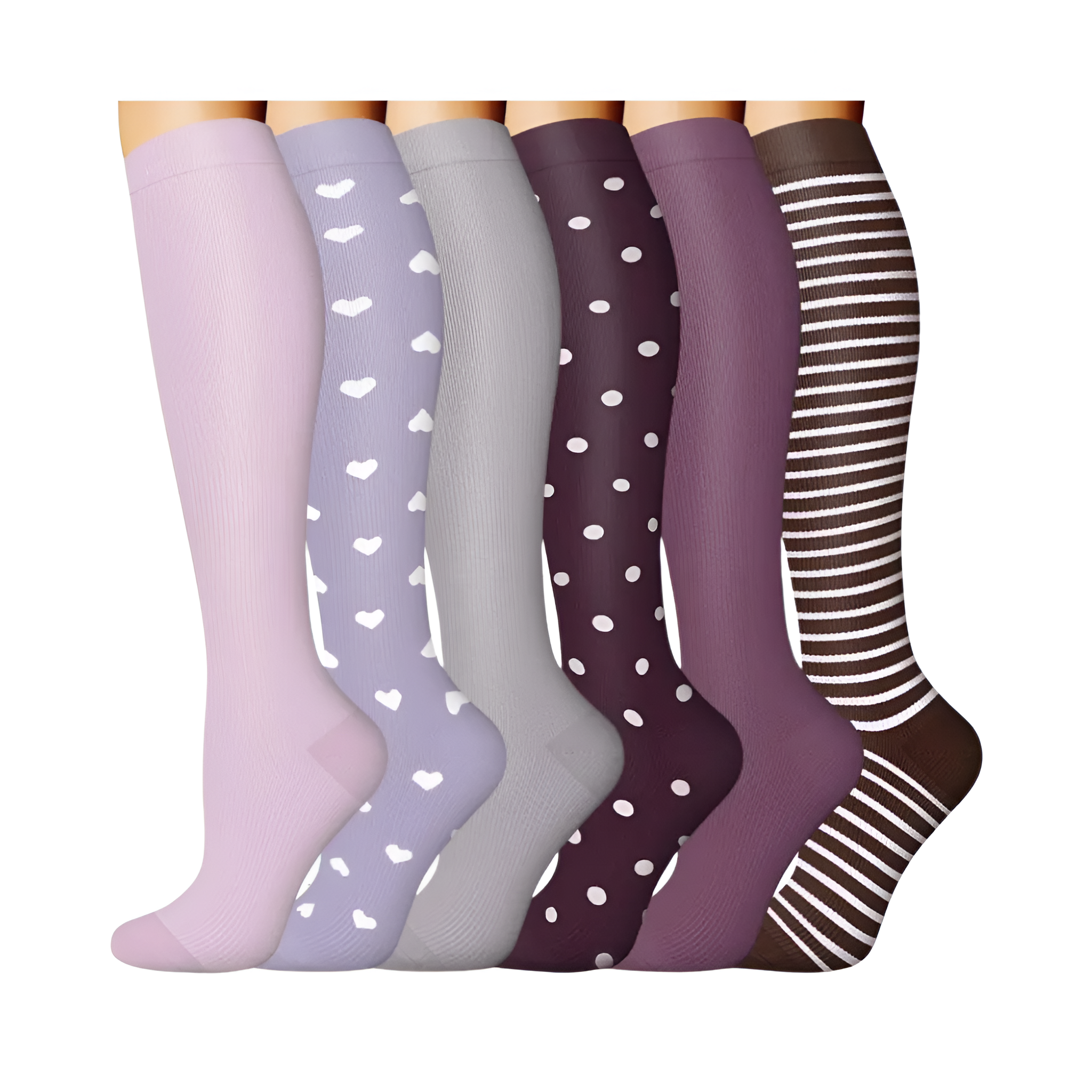
Quick answer: Compression sock fit is driven by two measurements: your shoe size and your calf circumference at its widest point. Measure the calf in the morning (before any daily swelling), check the size chart on the product page, and when the two measurements point to different sizes, follow the calf measurement — the calf is where compression fit succeeds or fails. Our compression styles run S–XL; if you're between sizes and new to compression, size up for comfort.
Compression socks that fit right feel like steady, even support. Compression socks that don't fit feel like either a loose regular sock (too big — you lose the point) or a tourniquet (too small — you'll never wear them again). Here's how to land the right size the first time.
Step 1: Measure your calf, not just your foot
Regular socks are sized by foot alone. Knee-high compression socks stand or fall on the calf. With a soft tape measure:
- Measure in the morning, before the day's standing and sitting cause natural lower-leg swelling. An evening measurement can run larger and push you into a size that's loose in the morning.
- Wrap the tape around the widest part of your calf — usually the upper third, a few inches below the knee. Snug, not squeezing.
- Note your usual shoe size as the second reference point.
Step 2: Match against the chart, calf first
Every compression product page carries its size options — our knee-high compression styles (copper, hiking & running, vibrant prints) all run S, M, L, XL, and the hiking set additionally offers men's and women's versions. If your shoe size says M but your calf measurement says L, order the L. A slightly roomier foot is a minor compromise; a calf band digging in is a returned product.
Step 3: Sanity-check the fit when they arrive
Put a pair on and walk around for an hour. Right fit feels like:
- Firmest at the ankle, gradually gentler up the calf — that's the graduated design working.
- The top band sits flat below the knee without rolling, folding, or leaving deep grooves.
- No numbness, tingling, or aching. Snug is correct; pain is not.
- The heel pocket actually sits on your heel — if it rides above, the size is too small.
Special cases
- Wide feet or swelling concerns: a non-binding style may serve you better than compression — our non-binding diabetic socks are sized by shoe size (6–13), and the bariatric extra-wide set uses a stretch one-size design that fits up to 3XL+. The full distinction is in our diabetic socks guide.
- Between sizes: new to compression → size up. Experienced and want firmer support → stay true to the calf measurement.
- Crew-height styles: the calf band sits lower, so calf circumference matters a bit less than on knee-highs — but the morning rule still applies.
Putting them on without the wrestling match
Even perfectly sized compression socks are snugger than regular socks. The trick: reach into the sock, pinch the heel, and turn the top half inside-out down to the heel pocket. Slip your foot in, seat the heel, then unroll the leg upward. Smooth out any bunching — wrinkles concentrate pressure. It takes ten seconds once it's habit.
Our size options at a glance
| Product | Sizing | Notes |
|---|---|---|
| Copper compression (all 4 sets) | S / M / L / XL | Unisex, knee-high |
| Hiking & running compression | S / M / L / XL | Separate men's & women's options |
| Vibrant compression | S / M / L / XL | Crew height |
| 12-pair sports socks | S / M / L | Regular (non-compression) crew |
| Non-binding diabetic | Shoe size 6–13 | Men's & women's options |
| Bariatric extra-wide | One size, up to 3XL+ | Non-binding stretch |
Frequently asked questions
Should I size compression socks by shoe size or calf size?
Use both, but when they disagree, follow the calf measurement - the calf band is where fit succeeds or fails on knee-high compression. Measure the widest part of your calf in the morning.
Why measure in the morning?
Lower legs naturally swell through the day from standing and sitting. A morning measurement captures your baseline, so the socks fit correctly all day instead of only in the evening.
How tight is too tight?
Pain, numbness, tingling, or deep grooves at the top band mean too tight. Correct fit is snug at the ankle, gentler up the calf, and comfortable enough to forget about after a few minutes.
What if I'm between sizes?
If you're new to compression, size up for comfort. If you're experienced and want firmer support, stay with the size your calf measurement indicates.
Do you have options for very wide feet or legs?
Yes - the bariatric extra-wide diabetic socks use a non-binding stretch design that fits up to 3XL+, and the non-binding diabetic socks avoid tight bands entirely. Those are loose-fit designs rather than compression.
More from the Sockz blog
- The best-selling socks of 2026 — ranked by real orders
- Copper compression socks — an honest guide
- Diabetic socks vs compression socks — which do you need?
- Shop diabetic socks
Sizing details are current as of publication — always check the size chart on the specific product page before ordering. This article is general fit guidance, not medical advice.