
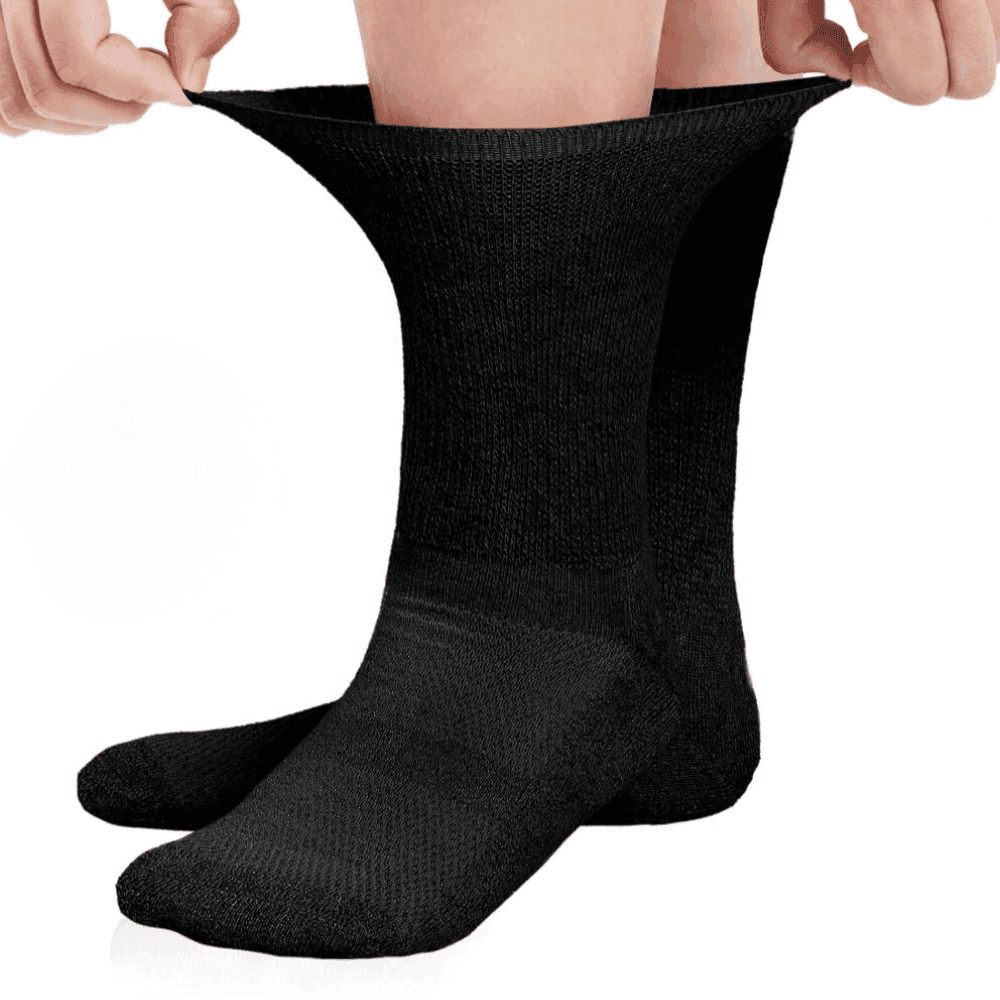
Quick answer: Diabetic socks and compression socks solve opposite problems. Diabetic socks are deliberately loose — non-binding tops, seamless toes, soft moisture-wicking fabric — to avoid pressure on sensitive feet and skin. Compression socks are deliberately snug to support circulation during long sitting or standing. If squeezing is what you want to avoid, you want diabetic socks; if support is what you're after, you want compression. When in doubt, ask your care team which suits your feet.
"Diabetic socks" is one of the most-searched sock categories — and one of the most misunderstood, because people assume they're a tighter, more medical sock. It's the opposite. Here's what actually makes a diabetic sock, and how our three best-selling designs differ.
What makes a sock "diabetic"?
Four design choices, all aimed at protecting sensitive feet and skin:
- Non-binding top. A stretchy, loose cuff instead of tight elastic, so nothing digs in at the ankle or calf.
- Seamless (or flat-seam) toe. Ordinary toe seams create a friction ridge; a seamless toe removes that rub point.
- Moisture-wicking fabric. Dry skin is less prone to irritation — these fabrics pull sweat away instead of holding it.
- Soft, cushioned knit. Comfort against skin that may be more sensitive than average.
These features are why plenty of buyers without diabetes wear them too — anyone with swelling, wide feet or calves, sensitive skin, or a hatred of tight sock bands gets the same benefit.
Our three diabetic styles, compared
6 Pairs Non-Binding Diabetic Socks ($29.99) — the all-rounder and our best seller in the category. Lightweight viscose/polyester/spandex blend, stretchy non-binding top, seamless toe, moisture-wicking, reinforced heels and toes for durability. Sized properly by shoe size (6–13) with men's and women's options — not vague S/M/L.
4-Pack Bariatric Diabetic Socks ($19.99) — the extra-room option. A non-binding stretch design that accommodates up to 3XL+ sizes, built for genuinely wide feet, ankles, and calves that standard "wide" socks still pinch. The listing also notes they can be worn over medical dressings during recovery — a practical detail if you're bandaged and every regular sock fights you.
7-Pack Non-Slip Diabetic Socks ($29.99) — the indoor-safety option. A soft, warm cotton-blend sock with gripping treads on the sole for traction on hardwood, tile, and smooth floors, plus a cushioned sole. If slips at home are the worry — common advice for anyone with reduced foot sensation, and for older adults generally — this is the one designed for it. Men's and women's options.
Side by side
| Non-Binding 6-Pack | Bariatric 4-Pack | Non-Slip 7-Pack | |
|---|---|---|---|
| Best for | Everyday all-rounder | Extra-wide feet & calves | Indoor traction & warmth |
| Fit | Shoe size 6–13, M/W | One size to 3XL+ | M/W options |
| Signature feature | Seamless toe, reinforced heel | Fits over dressings | Gripper sole treads |
| Fabric feel | Light & breathable | Soft stretch | Warm & cushioned |
| Price | $29.99 / 6 pairs | $19.99 / 4 pairs | $29.99 / 7 pairs |
Diabetic vs compression: pick the right tool
The confusion between these categories is understandable — both live in the "health sock" aisle. The distinction:
- Choose diabetic-style socks when pressure is the enemy: sensitive skin, wide or swollen feet, irritation from seams and bands, or a preference for socks you can't feel.
- Choose compression socks when support is the goal: long flights, standing shifts, active recovery — a deliberate, graduated squeeze.
- Medical conditions change the calculus. If you have diabetes, neuropathy, or a circulatory condition, your doctor or podiatrist should weigh in on which type — and in the case of compression, what strength — is right for your feet. That's not fine print; foot care genuinely matters more when sensation is reduced.
Care tips
All three styles are machine washable. Wash cold and skip bleach to keep the stretch and softness; the non-slip pairs keep their grip longest when air-dried or tumbled low. With a 4–7 pair pack, rotate pairs so each gets recovery time between wears.
Frequently asked questions
Are diabetic socks tight or loose?
Loose - that's the defining feature. Non-binding tops, seamless toes, and soft fabric are designed to eliminate pressure points, the opposite of compression socks' deliberate snugness.
Can I wear diabetic socks if I don't have diabetes?
Absolutely. Anyone with wide feet, swelling, sensitive skin, or a dislike of tight sock bands gets the same comfort benefits. The bariatric set in particular serves anyone needing genuine extra width.
What are non-slip diabetic socks for?
Indoor traction: gripping treads on the sole reduce slipping on hardwood, tile, and smooth floors. They're popular for anyone at higher risk of falls at home, including older adults.
Do diabetic socks replace medical advice?
No. They're comfort-focused everyday socks, not medical devices. If you have diabetes or reduced foot sensation, ask your care team about your specific foot-care needs.
How much is shipping?
Standard shipping is a flat $8.95 per order, with processing in 1-2 business days and delivery in about 5-8 business days after processing.
More from the Sockz blog
- The best-selling socks of 2026 — ranked by real orders
- Copper compression socks — an honest guide
- How to pick your compression sock size
- Shop orthopedic socks
Prices and specifications are current as of publication and may change. See each product page for the latest details. This article is general product information, not medical advice — consult your care team about your specific needs.