
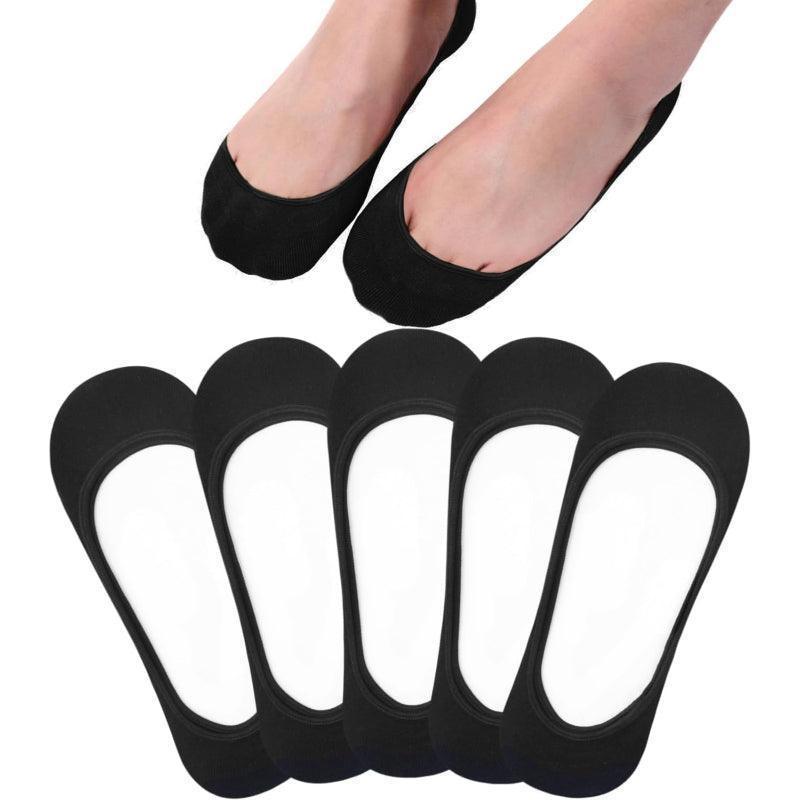
In shared household laundry, match socks by size and design as well as color. Keep pairs with different care requirements identifiable, and give each person's clean socks a consistent destination. Two black socks are not necessarily a pair, especially when the household has several similar styles.
September schedules can make laundry handoffs more frequent as school, work and activities restart. A small sorting change is often more useful than buying more socks to compensate for a drawer full of mismatches.
Identify the differences that matter
Compare length, size markings, toe construction and cuff design. Lay uncertain socks side by side rather than matching them while they are folded into themselves. A similar color can hide a different height or size.
For example, a low-cut liner and an ankle sock may look alike in a pile but fit differently in a shoe. The 5 Pair Ultra Liners Toe Socks are a specific design to keep distinct from ordinary full-foot socks.
Do not stretch one sock aggressively to make it look the same length as another. Check the actual labels and construction. If you cannot identify a pair confidently, set it aside rather than quietly assigning it to someone else.
Separate care requirements before washing
Read the label for each type. A household color-sorting routine is not enough if some pairs require different washing or drying treatment. Keep unfamiliar items identifiable until their instructions are clear.
Compression or medically prescribed hosiery needs particular care in the handoff. Do not swap it between household members, infer a pressure level from appearance or substitute an ordinary pair for prescribed use. Follow the wearer's qualified guidance and the product instructions.
The Durable High Length Compression Socks are a separate product category; this laundry guide does not recommend them for any medical purpose.
Choose one return route for each wearer
Use separate clean baskets, drawer areas or another simple system appropriate to your home. The important part is consistency: everyone handling laundry should know where each person's items go.
If household members share similar sizes, let them choose recognizable patterns or another non-damaging identification method for future purchases. Do not attach hard objects or labels where they affect comfort inside a shoe.
Avoid creating a complicated code that only one person understands. The system should be easier than asking whose socks they are every week.
Give unmatched socks a deadline for review
Keep unmatched socks in one small place while checking the next laundry loads and usual hiding spots. Review the pile periodically. A growing bag of singles should not become permanent storage for damaged items you would not wear anyway.
When a pair is genuinely incomplete, decide whether the remaining sock has another appropriate use or should leave the everyday drawer. Do not force a visibly different pair together just to empty the basket.
Finish with clean pairs the right person can recognize and use. A clear laundry handoff protects the practical differences between socks and reduces the temptation to replace items that were never actually missing—only returned to the wrong drawer.
For the related basics, read our guide to when to replace worn socks.