
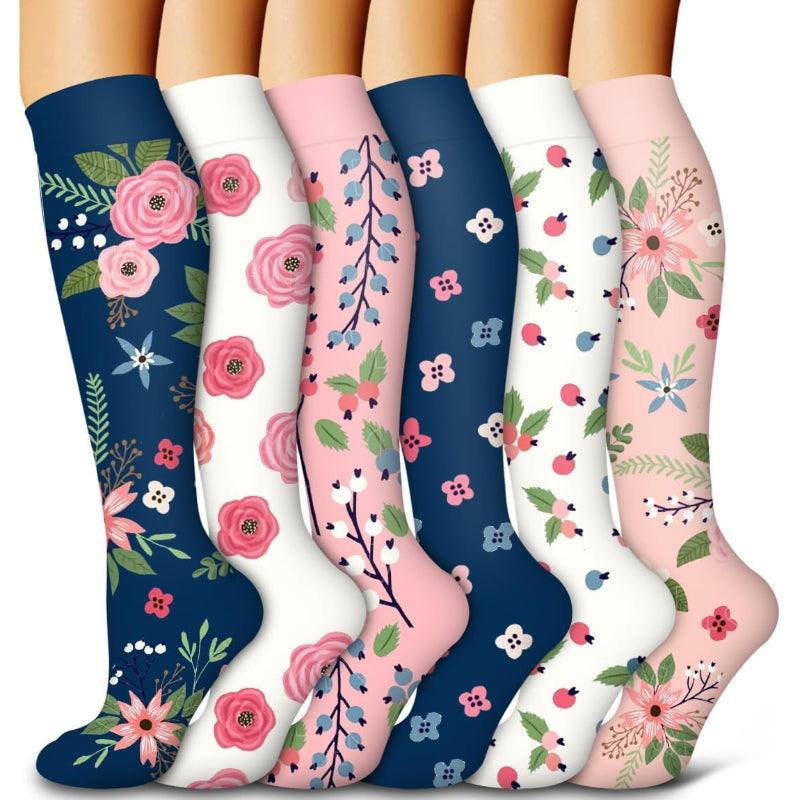
Quick answer: For flights and road trips, a graduated compression sock — snuggest at the ankle, easing up the leg — is the classic travel pick, worn from before departure until you're moving normally again. Our copper compression packs are the listings built most directly for travel, from $23.99 for six pairs. If compression was prescribed to you, follow your care team's guidance.
It says something that our single best-selling product this year — the 6 Pairs Copper Compression Socks, 275 sold since mid-January — is described on its own listing as a travel sock. Long journeys are one of the main reasons people go looking for compression in the first place. Here's a practical guide to using them well on the road, without any overpromising.
Why travel days feel hard on legs
An economy seat or a long stint behind the wheel means hours of sitting nearly still, knees bent, feet on the floor. Many travelers notice their legs feel heavy, tired, or puffy after a long haul — which is exactly the scenario compression socks were designed around. None of this makes a sock magic; it just makes the travel day the moment when leg comfort gets noticed most.
What a graduated sock is designed to do
Every compression sock we carry uses a graduated design: the knit is firmest around the ankle and eases as it moves up the leg. The listings describe this as targeted pressure designed to support circulation during long periods of sitting or standing. Most of our copper packs don't publish a specific mmHg figure; the Vibrant Compression Socks are the exception, listed at 15–20 mmHg. We won't promise medical outcomes either way — what travelers buy them for is the supported, held-together feeling over hours in a seat.
When to put them on (and take them off)
The practical routine most travelers settle into: put the socks on at home when you get dressed — wrestling a snug sock on in an airplane seat is nobody's favorite yoga — and keep them on through the journey until you're back to moving around normally. Feet and legs are typically at their slimmest in the morning, so that's also when a snug sock goes on easiest.
Our travel-ready picks
| Pack | Price | Travel angle from the listing |
|---|---|---|
| 6 Pack Copper Compression | $23.99 | Pitched at flights and road trips; wide no-roll top band |
| Six Pairs Copper Compression | $25.99 | Lightweight, packs small, neutral tones for any outfit |
| 6 Pairs Copper Compression | $26.99 | Lightweight, breathable; the travel pick our customers buy most |
| Vibrant Compression | $29.99 | Crew height, 18 patterns; listing covers flights and car travel |
All four share the graduated build and an 85% nylon base blend; the choice is mostly price, height, and how loud you want your ankles to be. Our copper guide separates the four copper sets in detail.
Flying vs driving: small differences
On a plane you mostly can't move, so the sock does its quiet work while you're pinned in 23B — pair it with the standard advice of flexing your ankles and walking the aisle when the seatbelt light allows. On a road trip you control the schedule: regular stops to stretch remain the best thing you can do for your legs, with the socks covering the long stretches between them. Drivers get the same benefit as passengers; just wear nothing that distracts from pedal feel.
Packing and washing away from home
Thin nylon-blend socks take up almost no luggage space — the Six Pairs listing specifically notes they tuck into small gaps in a bag. Multipacks mean you can rotate a fresh pair daily on a week-long trip without laundry. If you do need to wash mid-trip, a cold-water sink wash with mild detergent matches the care instructions, and a thin nylon knit hung overnight is usually dry by morning. Skip hotel dryers; high heat is the fastest way to kill stretch.
Frequently asked questions
Which pack should a first-time flyer try?
The 6 Pack Copper Compression at $23.99 is the lowest-cost way in - six pairs of the same graduated, copper-infused build as the rest of the line, and its listing directly mentions flights and road trips.
Should I wear them for the whole flight?
Most travelers put them on while getting dressed at home and wear them until the travel day is over. It is far easier than changing socks in an airplane seat, and morning is when a snug sock fits best.
Will six pairs take up much luggage space?
No - these are thin, lightweight nylon-blend knits. The Six Pairs Copper listing notes they fit into small spaces, and a rolled pair is roughly the size of a bread roll.
What compression level are these?
Most of our copper packs don't publish a specific mmHg figure; the Vibrant Compression Socks in the table above are listed at 15-20 mmHg. If a clinician prescribed a specific compression level for you, stick with what they recommended and ask them before substituting.
How do I get the right size?
Go by calf measurement rather than shoe size alone, measured in the morning. Our compression sock size guide on the blog walks through the steps and the S-XL range.
More from the Sockz blog
- How to pick your compression sock size
- Copper compression socks: an honest guide
- How to wash compression socks so they last
- Shop our best sellers
Sales figures cover orders from January 16 to July 16, 2026. Prices are current as of publication and may change — see each product page for the latest details. This article is general information, not medical advice — consult your care team about travel, circulation, or any prescribed compression.