
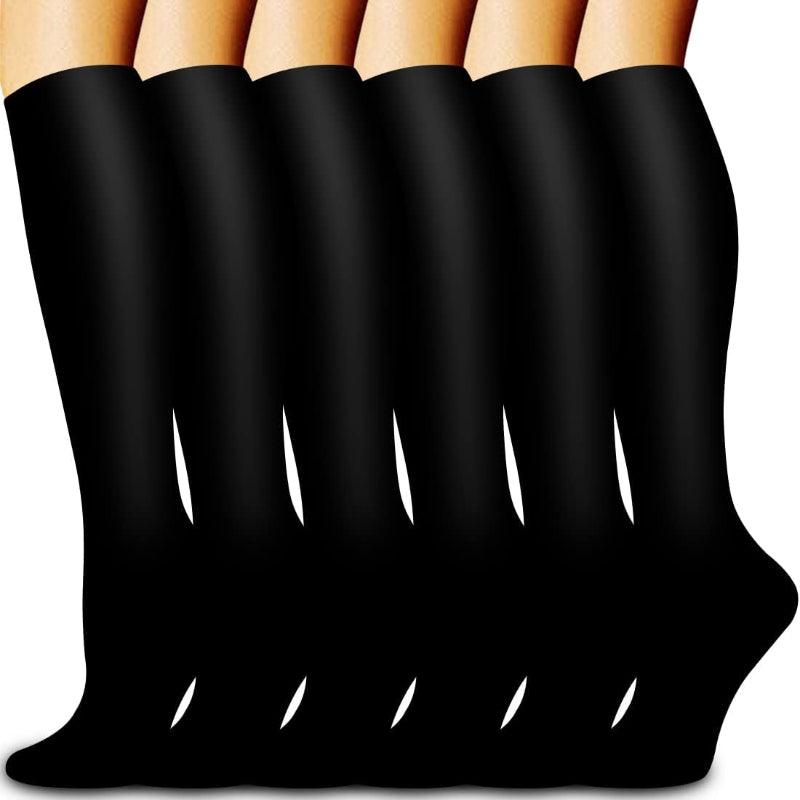
Quick answer: Wash compression socks cold on a gentle cycle with mild detergent, skip bleach and fabric softener entirely, and dry on low heat or — better — on a line. Heat is the main killer: it breaks down the stretch fibers that create the compression. Our listings agree on the basics and differ only on drying, so check your pair's rules below.
A compression sock is a spring you wear. The graduated squeeze comes from stretch fibers knitted under tension — and everything on the "don't" list (hot water, high dryer heat, bleach, softener) is there because it relaxes or damages that spring. Treat the knit gently and a multipack lasts; cook it weekly and you own six pairs of loose tubes.
The rules every one of our listings agrees on
- Cold water, gentle cycle. Every compression product we sell specifies a cold wash.
- Mild detergent. Named on the hiking, copper, and Six Pairs listings — harsh detergents work against fabric elasticity.
- No bleach, ever. Universal across the range; it attacks both fibers and color.
- No fabric softener. Also universal. Softener tends to coat synthetic fibers, which undermines the stretch and the moisture-wicking these knits are built around.
- Wash with similar colors. Called out on the 6 Pack Copper listing — relevant if you own the patterned sets.
Drying: the step where products differ
This is where a blanket rule fails, because our listings genuinely disagree:
| Product | Drying instruction |
|---|---|
| 6 Pairs Copper Compression | Tumble dry low |
| 6 Pack Copper Compression | Tumble low or air dry |
| Hiking & Running Compression | Air dry or tumble low |
| Vibrant Compression | Line dry only — no tumble, no iron, no dry cleaning |
| Six Pairs Copper Compression | Tumble low; wash inside out first |
The pattern: solid copper styles tolerate a low tumble, while the printed Vibrant set wants a clothesline to protect both stretch and print. When in doubt, air drying is never wrong for any of them.
The lazy routine that suits every pair
If you refuse to track per-product rules, this common denominator keeps everything safe: turn socks inside out, cold gentle cycle with mild detergent, then hang or lay flat to dry overnight. Thin nylon-blend knits dry fast, so air drying costs you nothing but patience — and it removes heat, the single biggest risk, from the equation entirely.
Small habits the listings recommend
Scattered across our product pages are a few less obvious tips worth stealing: wash after every wear (the Six Pairs listing frames this as basic hygiene — these sit tight against skin all day); turn them inside out so the wash hits the sweat side; don't wring or twist them out, press the water instead; and store them dry, in a drawer away from direct sunlight, which the hiking listing warns can degrade the fabric over time.
Washing on the road
Travel is compression-sock prime time, so mid-trip washing comes up often. A hotel-sink wash follows the same rules: cold water, a little mild detergent, a proper rinse, press the water out against a towel, hang overnight. Skip the hotel dryer — you can't control its temperature, and one hot cycle undoes months of careful laundry. More travel specifics in our travel compression guide.
When to retire a pair
No compression sock lasts forever, well-washed or not. The signal is simple: when the ankle no longer feels distinctly snugger than the calf, or the top band has gone slack, the graduated design has faded and the sock is now just a sock. Rotating a six-pair set spreads that decay across the pack, which is a quiet argument for multipacks generally.
Frequently asked questions
How often should compression socks be washed?
After every wear. The Six Pairs Copper listing states this directly as a hygiene practice - compression socks sit tight against your skin all day, so they collect more sweat and oil than loose socks.
Can compression socks go in the dryer?
Most of our copper and athletic styles allow a low-heat tumble, but the Vibrant patterned set specifies line drying only. High heat is off-limits for all of them - it degrades the stretch fibers.
Why is fabric softener banned?
The listings warn it works against the compression properties. Softener tends to coat synthetic fibers, which relaxes the knit's grip and hampers moisture-wicking.
Do I ever need to iron or dry clean them?
No - and for the Vibrant set both are explicitly prohibited. A knitted sock has no crease to press, and solvent cleaning does the stretch no favors.
Do diabetic socks follow the same rules?
Broadly yes - cold, gentle, no bleach - but our non-binding diabetic socks ask for flat air drying to protect the stretchy top. Check the care lines on each product page.
More from the Sockz blog
- Vibrant Compression Socks: 18 patterns, one support build
- Copper compression socks: an honest guide
- How to pick your compression sock size
- Browse the Compression Sockz collection
Care guidance above is summarized from current product listings — always check your own pair's product page, as instructions can change. This article is general information, not medical advice — consult your care team about any prescribed compression wear.