
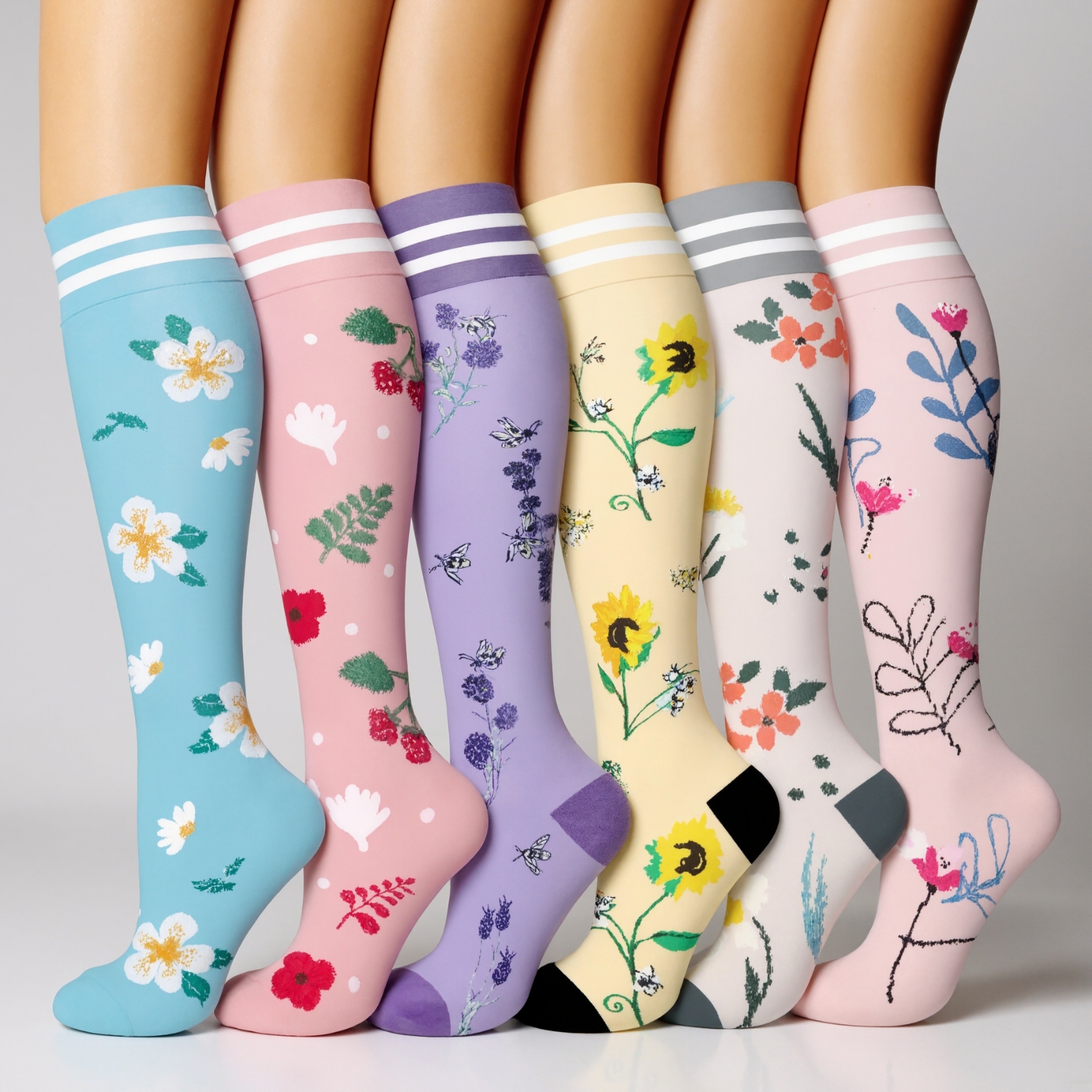
Quick answer: Two sock strategies help with long shifts: graduated compression, designed to support legs through hours of standing, and thick cushioning, which pads feet against hard floors. Our copper compression packs (from $23.99) and the 12-pair cushioned sports pack ($34.99) are the top-selling examples of each — plenty of shift workers keep both in rotation.
Nobody googles "socks for standing all day" out of curiosity. It's a search made at 9 p.m. by someone whose feet just finished a double. Nurses, retail staff, warehouse crews, and teachers show up repeatedly in our product listings for a reason — they're who these socks get built for. Here's how to choose between the two approaches our catalog offers.
The ten-hour problem
Standing work punishes from two directions at once. From below, hard floors — concrete, tile, hospital lino — hammer the soles of your feet step after step. From within, hours of being upright leave legs feeling heavy and tired by the final stretch of a shift. Most people who work on their feet know that end-of-day ache well. The two sock strategies attack one direction each.
Strategy one: compression, for the legs
Graduated compression socks are knit firmest at the ankle, easing upward — a build the listings describe as designed to support circulation and reduce leg fatigue over long standing or sitting. The use-cases printed on our Six Pairs Copper Compression listing read like a shift-work roll call: warehouse, shop and floor staff, healthcare, teaching and support roles, standing-based service environments. The 6 Pack Copper ($23.99) and the flagship 6 Pairs Copper ($26.99) share the same 85% nylon / 15% polyester copper-infused build with a wide top band designed not to roll down mid-shift — a small feature that matters enormously at hour nine.
Strategy two: cushioning, for the soles
The Unisex 12 Pairs Sports Socks ($34.99) take the other route: no squeeze, just padding placed in key impact zones, designed to absorb shock, plus built-in arch support designed to reduce stress on the midfoot during extended use. The 80% cotton knit is soft and breathable, and twelve pairs means a clean pair every workday without midweek laundry. If your complaint is "the floor," not "my legs," start here.
Match the sock to the shift
| Your shift looks like | Worth trying first |
|---|---|
| 12-hour hospital shift, mostly standing and walking | Copper compression — healthcare roles are named on the listings |
| Warehouse or concrete floors in work boots | Cushioned sports pack; heavy-duty arch-support insoles pair well in boots |
| Retail on tile, constant short walks | Either — compression for leg fatigue, cushioning for foot soreness |
| Teaching: standing, sitting, repeat | Compression; the listings call out sit-stand transitions specifically |
Habits that multiply whatever you buy
- Get the size right. A compression sock that's too small digs in all shift; our size guide takes five minutes.
- Rotate pairs. Multipacks exist so no pair gets worn two days running — fibers recover between wears.
- Keep feet dry. If your feet sweat heavily, a fresh pair at the midpoint of a long shift is a cheap luxury that feels expensive.
- Retire stretched socks. Once a compression sock stops feeling snug, it's stopped doing its one job.
What we won't promise
Socks won't rescue worn-out shoes, fix a brutal schedule, or treat anything medical. If your feet or legs hurt persistently, swell noticeably, or you have a condition that affects circulation, that's a conversation for your care team — not a checkout page. What the right sock can honestly do is make the same shift feel less punishing, which is why shift workers keep buying them.
Frequently asked questions
Compression or cushioned - how do I pick?
Go by what aches. Heavy, tired legs point to graduated compression; sore soles from hard floors point to cushioning. Plenty of shift workers rotate both across the week.
Can I wear compression socks for a full 12-hour shift?
The listings position them for exactly that - long standing or sitting stretches. If you are new to compression, it is sensible to try them on a shorter day first and see how they feel, and to check with your care team if you have any circulation condition.
Is there a specific sock for nurses?
No special nurse sock exists - what matters is a stay-up top band, moisture management, and support. Healthcare roles are explicitly named on our copper compression listings.
What about steel-toe boots on concrete?
Cushioned socks help, and the heavy-duty arch-support insoles we carry are rated for up to 220+ lbs and pitched at long shifts in work boots. Sock plus insole covers padding from both sides.
How many pairs do I actually need?
Enough that no pair works two days in a row - a six-pair compression pack or the 12-pair cushioned pack covers a full week with laundry to spare.
More from the Sockz blog
- The best-selling socks of 2026, ranked by real orders
- Unisex 12 Pairs Sports Socks: the bulk pack, examined
- Compression socks for travel: long flights and road trips
- Shop cushioned socks
Prices are current as of publication and may change — see each product page for the latest details. This article is general information, not medical advice — consult your care team about persistent pain, swelling, or any circulation concerns.