
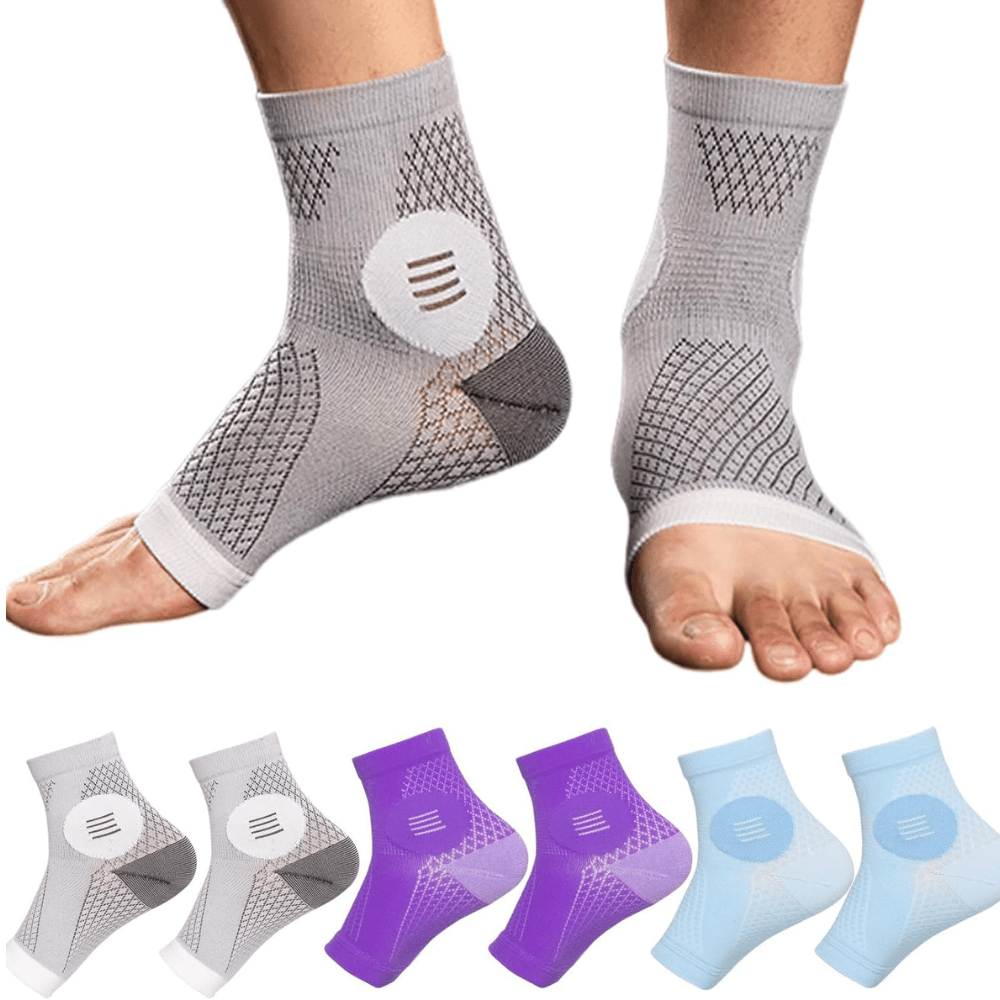
Quick answer: Beyond compression and diabetic socks, Sockz organizes nine specialty comfort collections around specific foot concerns: gel, toe, plantar, arthritis, bunions relief, anti-blister, orthopedic, neuropathy, and ankle support. Each collection groups socks designed around that concern's general needs. This is a category guide, not medical advice — see a doctor for diagnosis or treatment questions.
Our catalog has grown well past "socks" as one category. If your feet have a specific complaint — dry skin, a sore joint, blisters that show up every summer — there's usually a collection built around it. This is a plain-language tour of what each one generally covers, so you know where to start browsing.
Gel socks
Gel socks are generally built around a gel lining or gel-infused panel, most often at the heel or ball of the foot, aimed at cushioning and moisture on dry skin. They're a category people reach for when standard cotton socks feel too plain for cracked heels or rough patches. Browse gel socks →
Toe socks
Toe socks separate each toe individually, the way a glove separates fingers. That structure is generally chosen for reducing skin-on-skin friction between toes, for a closer-fitting feel in certain shoes, or simply as a preference some wearers have over a standard rounded toe box. Browse toe socks →
Plantar socks
This collection groups socks generally designed around under-foot support and compression through the arch area, the zone people associate with plantar discomfort. As with any of our compression-adjacent socks, this is a comfort-focused design intent, not a treatment claim. Browse plantar socks →
Arthritis and bunions relief socks
Both collections are generally built around easier-to-manage fit for sensitive joints and forefoot shapes: think a looser or non-binding top, softer seams, and more room or stretch through the forefoot, for wearers who find a snug, sharp-seamed, narrow-toed sock uncomfortable. Browse arthritis socks → · Browse bunions relief socks →
Anti-blister socks
Anti-blister socks are generally built around reducing friction points — through seamless construction, moisture-wicking fabric, or a closer-fitting knit — in the areas socks most commonly rub during activity or a long day of walking. Browse anti-blister socks →
Orthopedic and neuropathy socks
"Orthopedic" is a broad umbrella in sock retail, generally used for supportive, non-restrictive features like reinforced structure or a gentler top band, rather than a certification. Our neuropathy collection is a narrower version of that idea, generally centered on seamless construction and a gentle fit for sensitive feet — we cover one real example in our neuropathy compression socks guide. Check each listing to see what "orthopedic" means for that specific product. Browse orthopedic socks → · Browse neuropathy socks →
Ankle support socks
Socks here are generally built with structure around the ankle — a snugger knit, a reinforced cuff, or added compression at the joint — for wearers who want extra stability in that specific area rather than full-leg compression. Browse ankle support socks →
How to pick a starting point
| If your main concern is... | Start here |
|---|---|
| Dry, cracked skin | Gel socks |
| Toe friction or a glove-like fit | Toe socks |
| Under-foot / arch discomfort | Plantar socks |
| Sensitive or sore joints | Arthritis socks |
| A tight forefoot | Bunions relief socks |
| Blisters from activity or walking | Anti-blister socks |
| General supportive structure | Orthopedic socks |
| Sensitive feet, seamless fit | Neuropathy socks |
| Ankle-specific instability | Ankle support socks |
These collections aren't mutually exclusive — a lot of products could reasonably sit in two of them. Use this as a starting filter, then read the individual product listing for the specifics that matter to you: material, sizing, and exactly what "support" means for that pair.
Frequently asked questions
Are these socks a treatment for a foot condition?
No. These are comfort- and fit-focused product collections, not medical treatments. If you have a diagnosed condition, talk to your doctor about what kind of sock or support is appropriate for you.
How is "orthopedic" defined for these socks?
It's used broadly across the industry for socks with supportive, non-restrictive design features rather than a formal certification. Check each product's own listing for its specific features.
Can I combine categories, like arthritis and compression?
Many products overlap more than one concern. Use these collections as a starting filter, then check the individual listing to see whether a specific pair also includes compression, seamless construction, or other features you want.
Do you have a compression sock guide too?
Yes - see our compression sock size guide and our copper compression socks guide, both linked from this article, for our compression-specific lines.
How much is shipping?
Standard shipping is a flat $8.95 per order to the USA and international destinations, with processing in 1-2 business days and delivery in about 5-8 business days after that.
More from the Sockz blog
- 3 Pairs Neuropathy Compression Socks — an honest look
- How to pick your compression sock size
- Diabetic socks vs compression socks — which do you need?
- Shop plantar socks
Prices and collection contents are current as of publication and may change — see each collection page for what's currently in stock. This article is a general category guide, not medical advice; consult your doctor or care team about any diagnosed foot condition.